Research findings depend on molecular identity, formulation, and study design. A vial’s listed amount is a material specification—not an administration recommendation. Verified batch reports are not currently published.
Beauty / Wellness
3 guides
COMPOUND REFERENCE
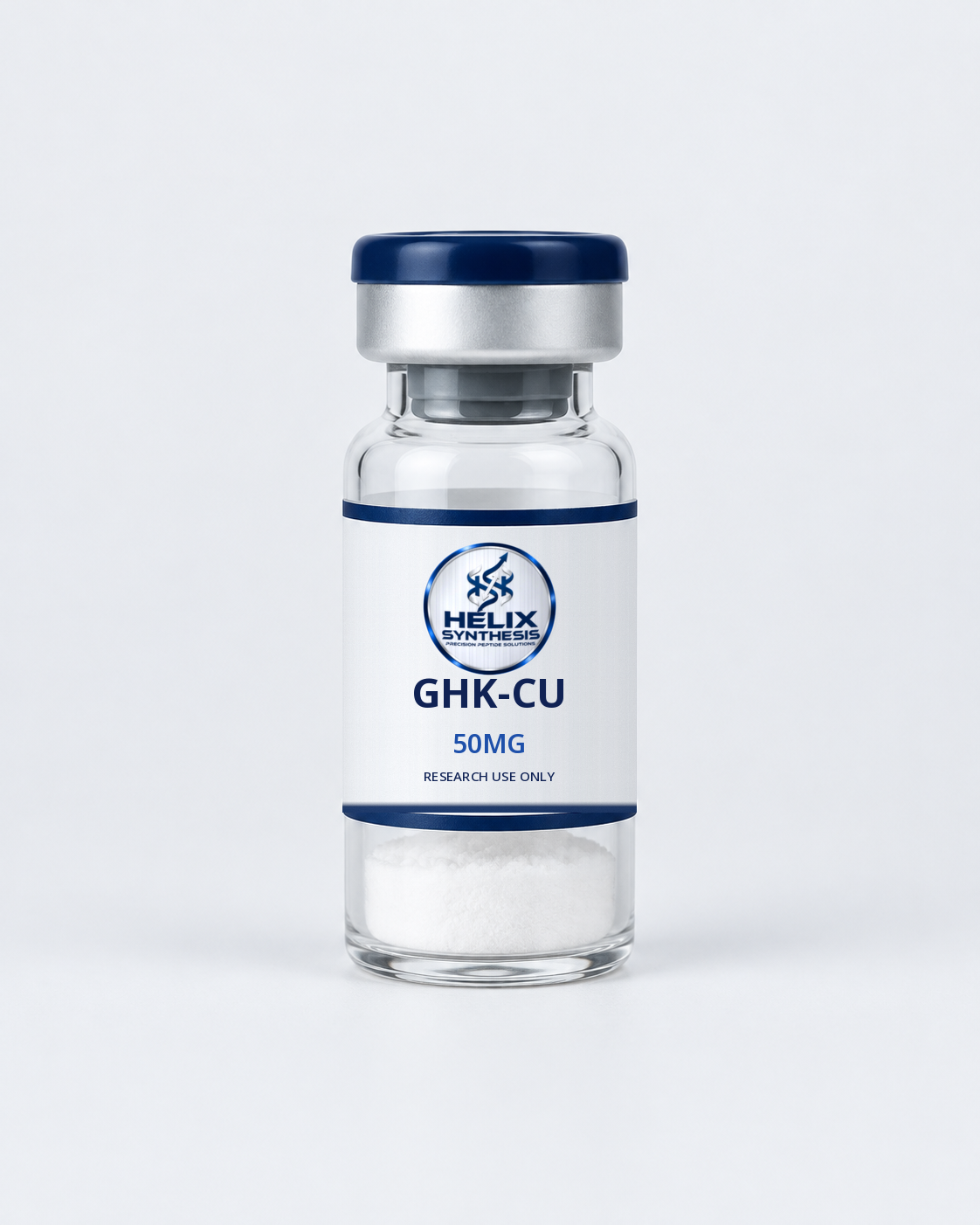
GHK-Cu
Copper-binding tripeptide
GHK-Cu is a copper complex of the glycyl-L-histidyl-L-lysine peptide. It is investigated in extracellular-matrix remodeling, wound models, and skin biology.
Research focus
Collagen and extracellular-matrix signaling
Oxidative stress and tissue-remodeling models
Evidence & limitations
Findings depend on formulation and experimental model.
Topical studies do not establish the safety or effects of other routes.
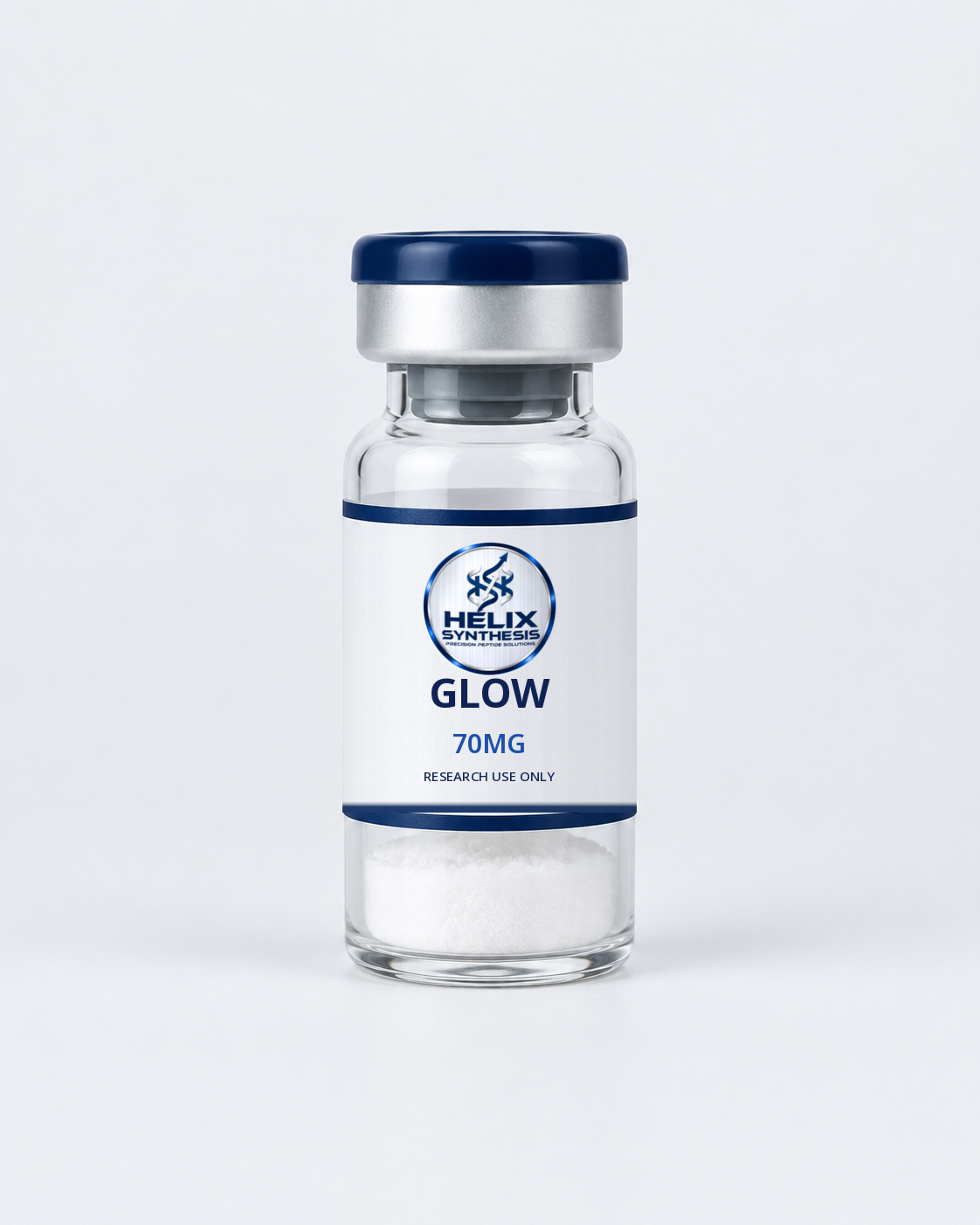
Glow is listed as a 70mg blend in the Helix collection. The product name alone does not establish its component identities or their individual amounts.
Research focus
Confirm component identities and proportions before selecting a study.
Use component-specific literature and appropriate controls.
Evidence & limitations
Verified blend composition is not currently published.
Results from individual peptides cannot be assumed to apply to a blend.
5-Amino-1MQ is studied as an inhibitor of nicotinamide N-methyltransferase, an enzyme involved in nicotinamide metabolism. It is a small molecule, not a peptide.
Research focus
NNMT activity and nicotinamide metabolism
Metabolic and adipose-tissue models
Evidence & limitations
Much of the evidence is preclinical.
Animal findings do not establish human efficacy or long-term safety.
Klow is listed as an 80mg blend. Its exact formulation needs material-specific documentation before findings from any proposed constituent can be applied.
Research focus
Verify constituent identities and individual quantities.
Compare blend outcomes with component-only controls.
Evidence & limitations
Verified component ratios are not currently published.
A total vial amount does not describe each ingredient’s concentration.
Lemon Bottle is supplied in a volume-based format. A brand name and vial volume are insufficient to determine the chemical composition or concentration of a solution.
Research focus
Obtain an ingredient list and concentration specifications.
Review formulation-specific analytical and safety documentation.
Evidence & limitations
Composition is not verified on this site.
Brand marketing should not be treated as evidence of safety or efficacy.
The Helix collection uses GLP-RT codes for several vial amounts. Confirm the molecular identity with the supplier before matching these products to literature on incretin receptor agonists.
Research focus
Confirm sequence or chemical identity and receptor selectivity.
Evaluate metabolic endpoints only against identity-matched literature.
Evidence & limitations
A catalog code is not a verified chemical identity.
Do not infer approval, clinical equivalence, or safety from a similar name.
SLU-PP-332 is an experimental small molecule investigated for activation of estrogen-related receptors and changes in oxidative metabolism in preclinical models.
GLP-TR materials are grouped by their Helix catalog codes. The codes alone do not verify a specific molecule or permit direct comparison with approved or investigational incretin products.
Research focus
Request molecular identity and material specifications.
Use identity-matched research and validated assay controls.
Evidence & limitations
No identity verification is published on this site.
Vial amount is not a dosing recommendation or proof of clinical equivalence.
Semax is a synthetic peptide related to an adrenocorticotropic hormone fragment. It has been studied in neurotrophic signaling and neurological experimental models.
Research focus
Neurotrophic signaling, including BDNF-related pathways
Neuronal stress and ischemia models
Evidence & limitations
Evidence quality and study populations vary.
Experimental findings do not establish a general cognitive benefit.
Selank is a synthetic heptapeptide derived from tuftsin. Research has explored neurochemical signaling and behavioral endpoints alongside immune-related pathways.
Research focus
Neurotransmitter and stress-response models
Immune signaling and gene-expression endpoints
Evidence & limitations
Large, independently replicated clinical evidence is limited.
Behavioral findings are model- and protocol-dependent.
DSIP is a nonapeptide investigated in sleep-related and stress-response research. Its historical name should not be interpreted as a proven effect on human sleep.
Research focus
Sleep physiology and neuroendocrine signaling
Stress-response endpoints in experimental models
Evidence & limitations
Reported sleep effects are inconsistent across studies.
Mechanisms and clinical relevance remain uncertain.
CJC-1295 is associated with GHRH-receptor signaling, while ipamorelin is a ghrelin-receptor agonist. The Helix item is a combined 10mg material; its component ratio and CJC formulation require confirmation.
Research focus
GHRH and ghrelin-receptor pathways
Separate constituent responses from combined-material effects.
Evidence & limitations
DAC and non-DAC formulations must not be treated as equivalent.
Component ratios and blend-specific evidence are not verified here.
Tesamorelin is a GHRH analog studied in growth-hormone signaling and metabolic endpoints. Evidence for regulated pharmaceutical formulations does not establish equivalence of a research vial.
Research focus
Pituitary GHRH-receptor and GH/IGF-1 signaling
Metabolic endpoints in defined study populations
Evidence & limitations
Endocrine and glucose-related effects require careful interpretation.
Research materials are not interchangeable with approved medicines.
PT-141 is a cyclic peptide associated with melanocortin receptor signaling. Published bremelanotide studies evaluate specific pharmaceutical formulations and populations.
Research focus
Melanocortin receptor activity
Central nervous system signaling endpoints
Evidence & limitations
Clinical literature reports nausea and transient blood-pressure changes.
Approval of a medicine does not establish this research material’s equivalence.
MOTS-c is a 16-amino-acid peptide associated with mitochondrial biology. It is investigated in metabolic regulation and cellular stress-response models.
Research focus
AMPK-associated metabolic signaling
Mitochondrial stress and metabolic homeostasis
Evidence & limitations
Much of the intervention evidence comes from experimental models.
Associations in humans do not prove benefit from administration.
NAD+ is a coenzyme involved in redox reactions and a substrate for enzymes such as sirtuins and PARPs. Research distinguishes NAD+ itself from its precursors.
Research focus
Cellular redox and energy metabolism
PARP, sirtuin, and NAD-consuming enzyme pathways
Evidence & limitations
Precursor studies cannot automatically be applied to NAD+ materials.
Biochemical function is not proof of an anti-aging treatment effect.
SS31 is a tetrapeptide investigated in relation to mitochondrial membranes and cardiolipin. Studies explore mitochondrial bioenergetics in specific experimental and clinical settings.
Research focus
Cardiolipin-associated mitochondrial processes
Bioenergetics and oxidative-stress endpoints
Evidence & limitations
Outcomes vary by disease model and study population.
Findings from pharmaceutical formulations do not verify this material.
BPC-157 is investigated primarily in preclinical gastrointestinal and tissue-injury models. Published animal findings are not established human therapeutic effects.
Research focus
Tissue-injury and repair models
Gastrointestinal and vascular signaling endpoints
Evidence & limitations
Robust human efficacy and safety evidence is limited.
Preclinical repair findings should not be presented as proven healing benefits.
KPV is the C-terminal tripeptide associated with alpha-melanocyte-stimulating hormone. It has been investigated in inflammatory signaling and barrier-function models.
Research focus
Inflammatory signaling pathways
Epithelial and intestinal experimental models
Evidence & limitations
Evidence is largely preclinical.
Formulation and exposure conditions affect interpretation.
IGF-1 LR3 is an engineered IGF-1 analog used in growth-factor signaling research. Its altered interaction with binding proteins distinguishes it from native IGF-1.
Research focus
IGF-receptor and downstream growth signaling
Cell proliferation and metabolic assay endpoints
Evidence & limitations
Growth signaling requires careful model and safety selection.
Glucose-related and proliferative effects prevent assuming general safety.
Thymosin beta-4 is an actin-binding peptide investigated in cell migration and tissue-remodeling models. TB500 naming is not consistently used for the same sequence across suppliers.
Research focus
Confirm the supplied sequence and molecular identity.
Actin-associated processes and cell-migration models
Evidence & limitations
Full-length thymosin beta-4 and fragments are not interchangeable.
Evidence must match the specific material identity.